Cameron Baumann · 4 September 2026
Inside Poland's research ecosystem: How shared tools from key labs are empowering educators nationwide
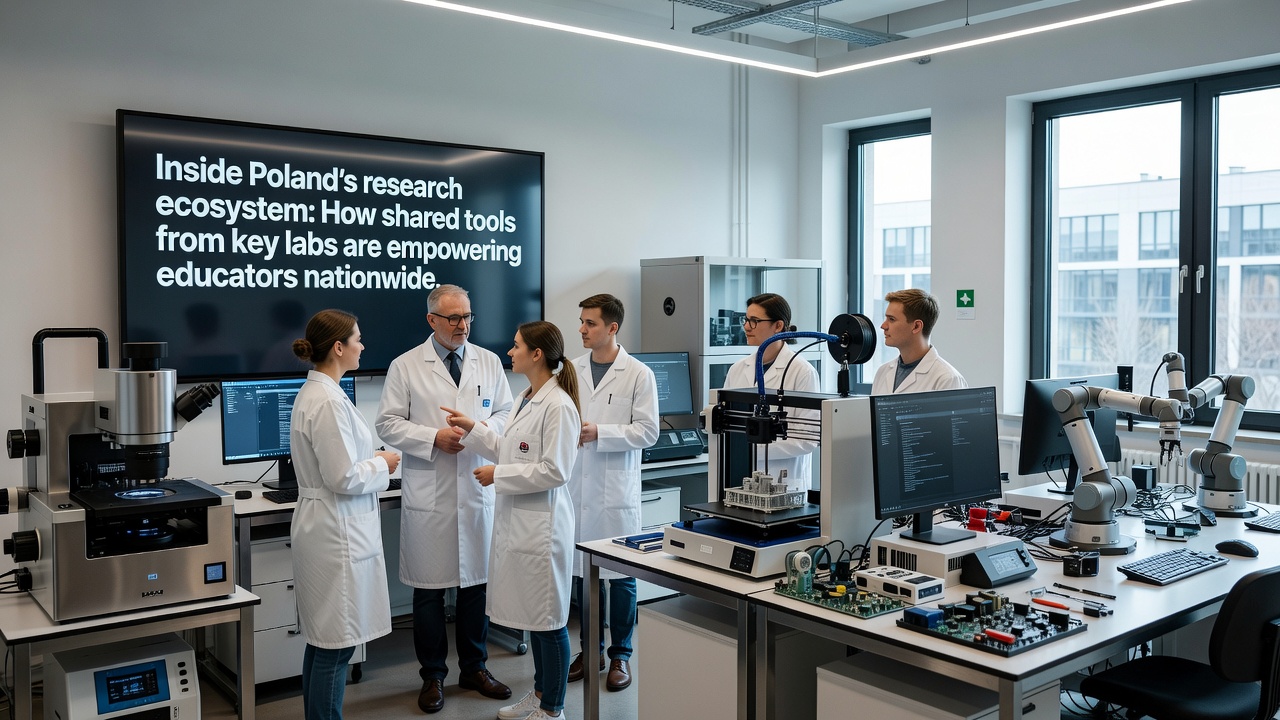
Poland's research landscape has expanded through coordinated efforts among major laboratories and universities, where shared digital platforms and equipment access programs now reach educators across multiple regions. Labs at institutions in Warsaw, Krakow, and Wroclaw have developed joint repositories for simulation software, data analysis tools, and remote instrumentation interfaces that allow secondary school teachers and university instructors to integrate advanced methods into their curricula without needing individual institutional budgets for specialized hardware.
Expansion of shared infrastructure across Polish institutions
Key facilities have pooled resources since the early 2020s, creating centralized access points that connect users through secure portals managed by national research consortia, and this approach has grown steadily with support from European Union structural funds that prioritize cross-border collaboration within member states. Educators in smaller cities and rural districts now log into these systems to run particle physics simulations or molecular modeling exercises that previously required travel to capital-city campuses, while data from the Central Statistical Office of Poland shows increased participation rates in STEM workshops that rely on these remote tools.
Take one program run jointly by the University of Warsaw and the Henryk Niewodniczański Institute of Nuclear Physics, where cloud-based analysis suites let teachers upload student-collected environmental data for real-time processing, and similar arrangements at the Jagiellonian University provide genomic sequencing interfaces that high-school biology classes access during term projects. These setups operate on scheduled reservation systems that balance demand from research teams and educational users, ensuring core scientific work continues uninterrupted.
September 2026 rollout and training initiatives
September 2026 marks the launch of an expanded training cycle organized by the Polish Ministry of Education and Science, where instructors from over 300 schools will receive certification in using shared lab interfaces for project-based learning. Sessions will cover everything from basic data visualization modules to advanced statistical packages drawn from ongoing national projects, and participants will gain credentials that count toward professional development requirements set by regional education boards.
What's notable is how these programs build on earlier pilots that began in 2023, when initial cohorts reported higher student engagement after incorporating shared visualization tools into physics and chemistry lessons. Observers at the National Centre for Research and Development have tracked usage metrics that indicate steady growth in both urban and regional settings, with educators adapting the resources to local curricula on topics such as climate modeling and renewable energy systems.
Integration with national and international networks
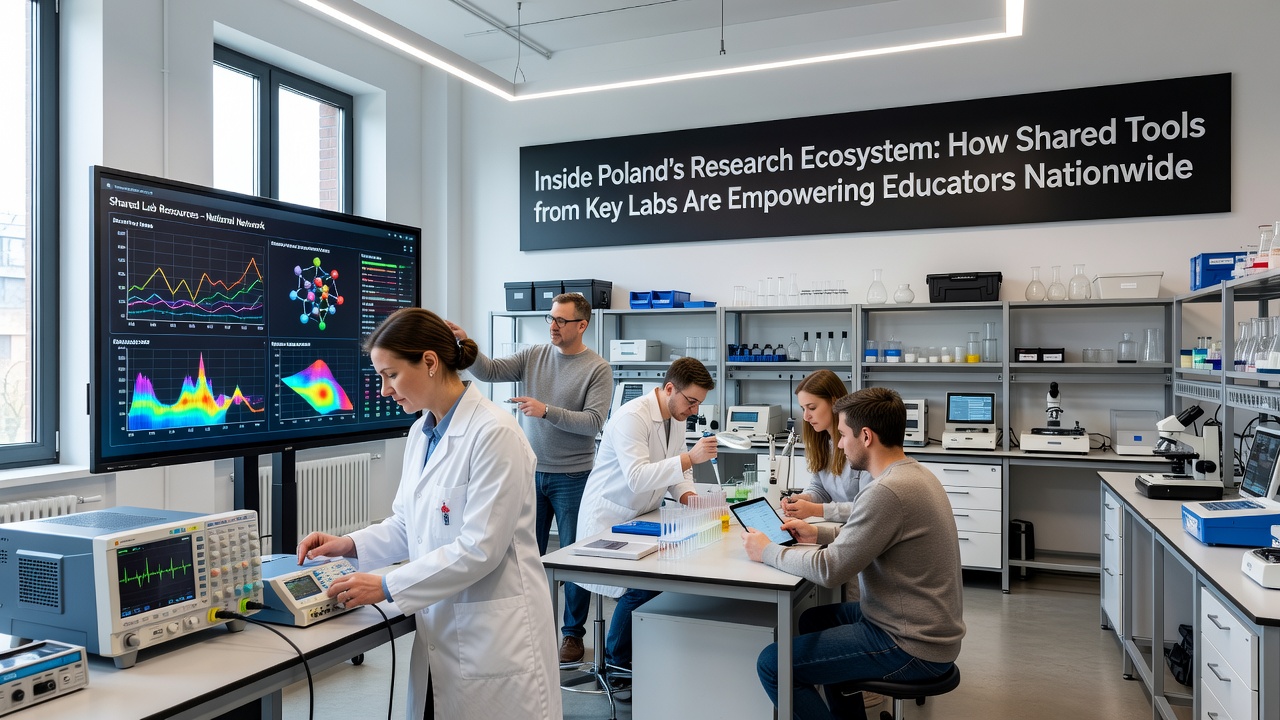
Polish labs participate in broader European frameworks that facilitate tool sharing beyond national borders, including connections to the European Open Science Cloud that allow educators to pull datasets from partner institutions in neighboring countries. According to National Science Centre Poland records, grant allocations for educational outreach components have risen in recent cycles, supporting the maintenance of user-friendly interfaces that translate complex research outputs into classroom-ready formats.
Another link appears through collaboration with OECD education indicators, where Polish participation helps benchmark how shared research tools affect teaching outcomes compared with systems in other member countries. Schools in the Podkarpackie and Lubelskie voivodeships have adopted these methods particularly quickly, often citing the ability to demonstrate real experiments through virtual twins of physical equipment located hundreds of kilometers away.
Case examples from regional education networks
One documented instance involves teachers in the Silesian region who combined shared spectroscopy software with local industrial case studies on material testing, producing student reports that align with vocational training standards. Similar patterns appear in coastal areas where marine biology educators draw on shared oceanographic modeling tools developed at Gdańsk University labs, allowing classes to analyze Baltic Sea temperature trends without direct vessel access.
Data from these deployments shows consistent patterns of increased project completion rates among students, and the infrastructure continues to evolve through feedback loops that route educator suggestions back to the originating research teams for interface refinements. Funding streams from both national budgets and EU cohesion programs sustain the servers and help desks that keep the systems operational year-round.
Conclusion
Poland's approach to distributing research capabilities through shared lab platforms has created measurable pathways for educators to incorporate current scientific methods into everyday instruction. Continued investment in these networks, including the September 2026 training expansions, positions the system to scale further while maintaining compatibility with European research standards. The result is a steadily widening circle of schools and instructors who operate with direct connections to the country's core scientific infrastructure.