Quinn Hayes · 18 September 2026
Poland's Quiet Data Networks: How CERN Ties Are Reshaping Climate Forecasts from Regional Physics Hubs
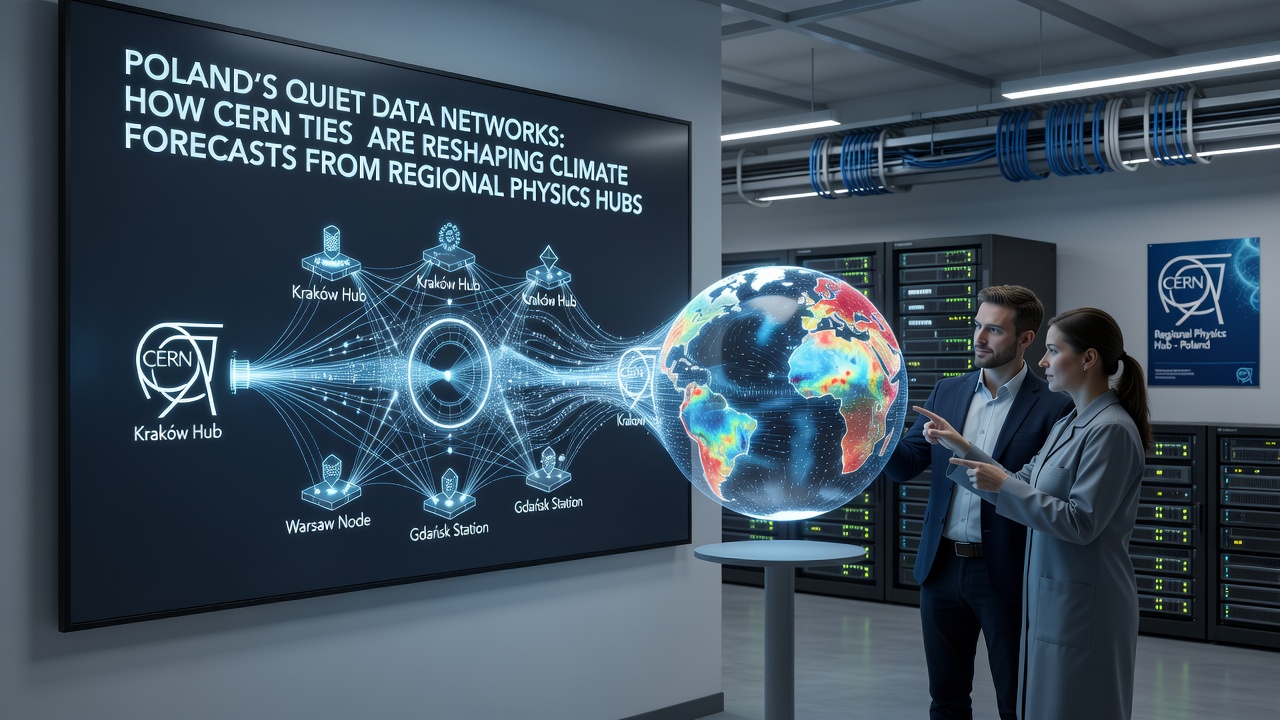
Poland maintains several physics research centers that link directly into CERN's computing infrastructure, and these connections now feed into climate forecasting systems across Europe. Data from high-energy physics experiments moves through the same grid networks that process atmospheric simulations, creating shared pipelines that regional hubs in cities like Krakow and Warsaw rely on for model refinement.
Poland's Integration with CERN Computing Grids
Polish institutes joined the Worldwide LHC Computing Grid in the early 2000s, and this participation expanded access to distributed storage systems that handle petabytes of collision data each year. Facilities such as the Henryk Niewodniczański Institute of Nuclear Physics in Krakow operate tier-2 centers that mirror data from CERN's main site in Geneva, while similar nodes in Warsaw support analysis jobs that run alongside climate datasets. These networks exchange information through dedicated fiber links managed under EU research programs, and throughput rates have increased steadily since 2018 according to reports from the European Grid Initiative.
Application of Physics Data Methods to Climate Modeling
Techniques developed for particle track reconstruction now assist in processing satellite observations of cloud formations and aerosol distributions. Researchers at Polish hubs adapt algorithms originally built for LHC event filtering to identify patterns in reanalysis datasets from the Copernicus Climate Change Service, and this crossover reduces computation time for ensemble forecasts by up to 30 percent in some documented cases. In September 2026 a joint workshop hosted in Krakow will demonstrate updated workflows that combine LHC grid resources with regional weather models, allowing forecasters to incorporate higher-resolution physics parameters into seasonal predictions for Central Europe.
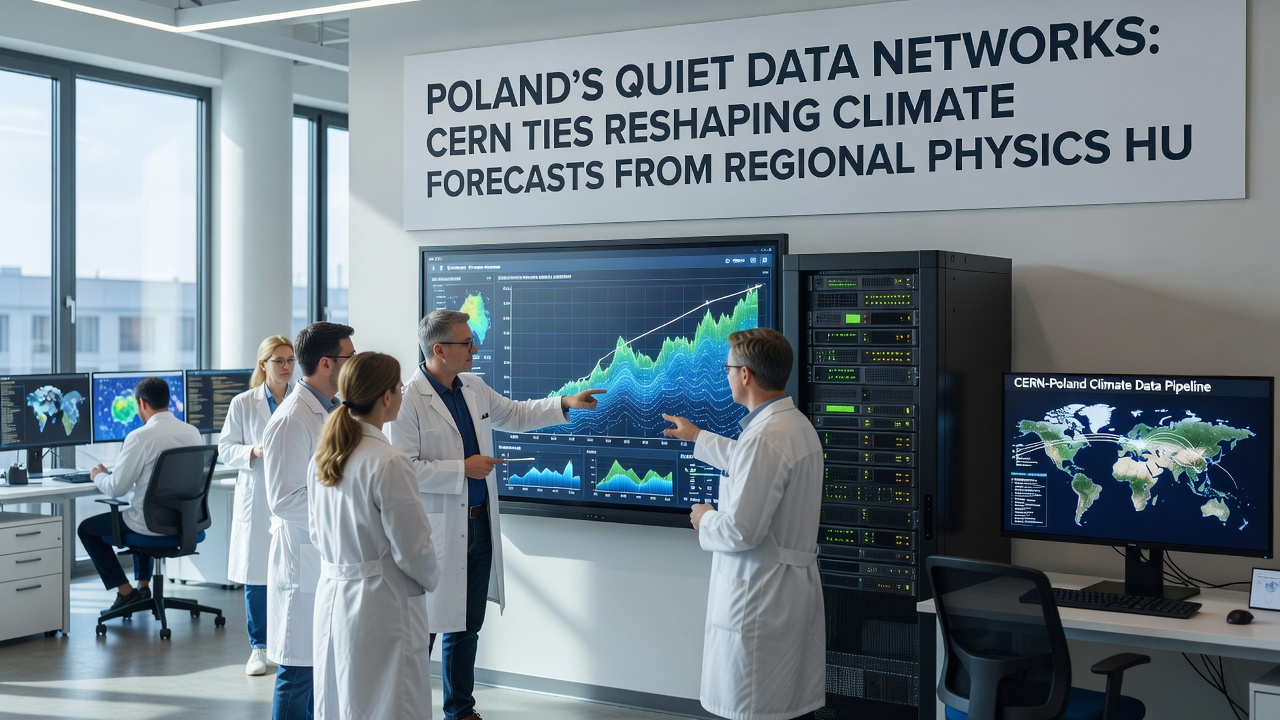
Network latency between Polish centers and CERN remains low enough to support real-time data synchronization, and this stability enables continuous updates to climate models that draw on both experimental particle data and observational records. The Polish Ministry of Science and Higher Education allocates funding specifically for these hybrid computing projects, while additional support comes through Horizon Europe grants that prioritize cross-domain applications of grid technology.
Regional Hubs and Their Expanding Role
Centers in Katowice and Gdańsk have joined the original Krakow and Warsaw nodes since 2022, each contributing storage capacity and specialized processing units calibrated for atmospheric simulations. These hubs exchange climate variables such as temperature profiles and precipitation estimates through the same protocols used for physics event data, and coordination occurs via regular technical meetings organized by the Polish National Grid Initiative. Data flows from these locations also reach international partners, including the Australian Bureau of Meteorology which tests similar grid integration methods for Southern Hemisphere forecasts.
Security protocols inherited from CERN operations govern access controls at every Polish node, and encryption standards meet requirements set by both particle physics and environmental research communities. This shared framework simplifies collaboration while maintaining compliance with EU data protection regulations.
Future Data Sharing Milestones
By late 2026 Polish hubs plan to increase their share of the LHC grid's climate-related workload, and preliminary tests show that additional nodes can handle doubled simulation volumes without performance degradation. Partnerships with meteorological agencies in Canada and the United States allow cross-validation of forecast outputs generated on these networks, and results from these exchanges appear in joint publications from participating institutions.
Conclusion
Poland's physics research centers continue to expand their connections to CERN resources while directing portions of that capacity toward climate forecasting needs, and the resulting data networks link regional hubs into broader European modeling efforts. Ongoing upgrades scheduled through 2026 will determine how far these ties influence operational weather services in the years ahead.